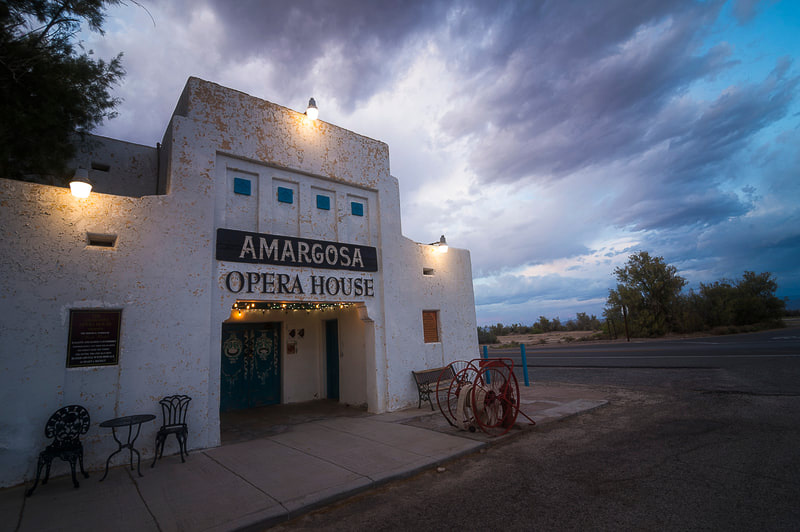
If not for a flat tire, Marta Becket may never have come across the abandoned hotel and social hall in the desert that would come to be her lifelong stage.
While her husband looked for help with the tire, Becket peered into the hall. The floors were warped, the paint was peeling, a set of broken benches looked lost in the gloom. But she saw something brighter.
“My life split in two at this junction,” she told the Los Angeles Times in 1999. “I looked at the stage and knew it was my future. I knew I’d perform here the rest of my life.” And she did.
Becket, who died January 30, 2017 (aged 92), spent decades presenting self-written, one-woman shows at the Amargosa Opera House, first in front of only empty seats and then full houses as fans drove deep into the desert to watch her perform.
The opera house in Death Valley Junction, a former mining hub seven miles from the Nevada state line, was at once a classic desert curiosity and a cultural beacon in the middle of nowhere.
A classically trained dancer who grew up in New York and danced at Radio City Music Hall, Becket made her debut at the opera house in 1968.
By her estimation, the population of Death Valley Junction was two — she and her husband. When he left her, the population shrank to one.
Aside from the occasional drifter, nobody arrived to see her performances. So she painted a large and festive audience on the walls and a Renaissance-style explosion of billowy clouds, cherubs and musicians in an ocean of blue on the ceiling.
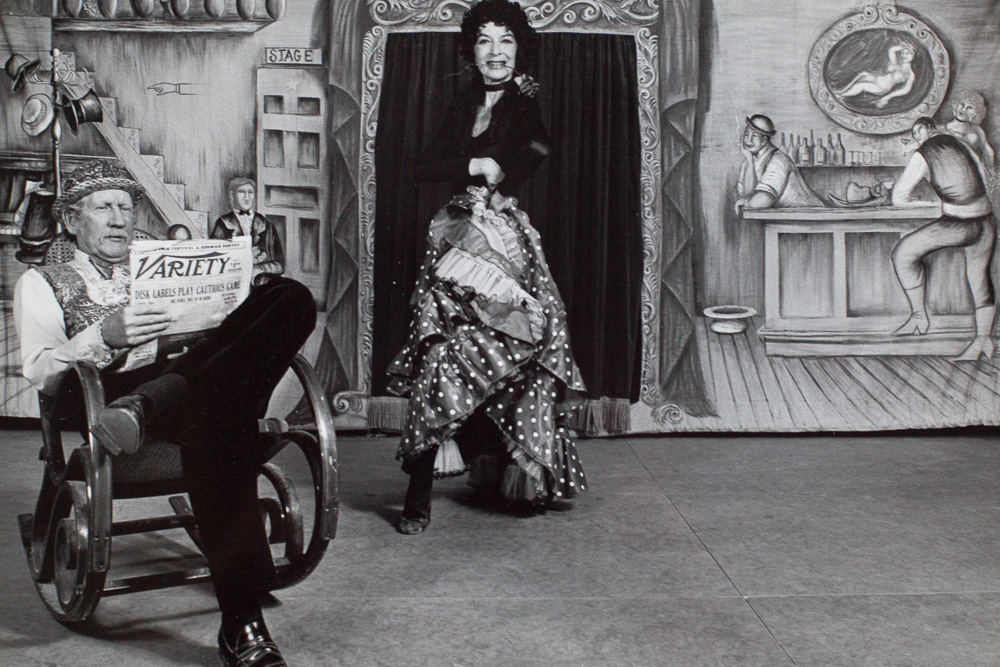
Aside from the occasional drifter, nobody arrived to see her performances. So she painted a large and festive audience on the walls and a Renaissance-style explosion of billowy clouds, cherubs and musicians in an ocean of blue on the ceiling.
National Geographic wrote about the opera house. TV crews arrived. And a 2000 documentary about Becket won an Emmy. Shows sold out. Fans showed up just to meet her.


 escapit
Leave a comment